 Laugh Therapy
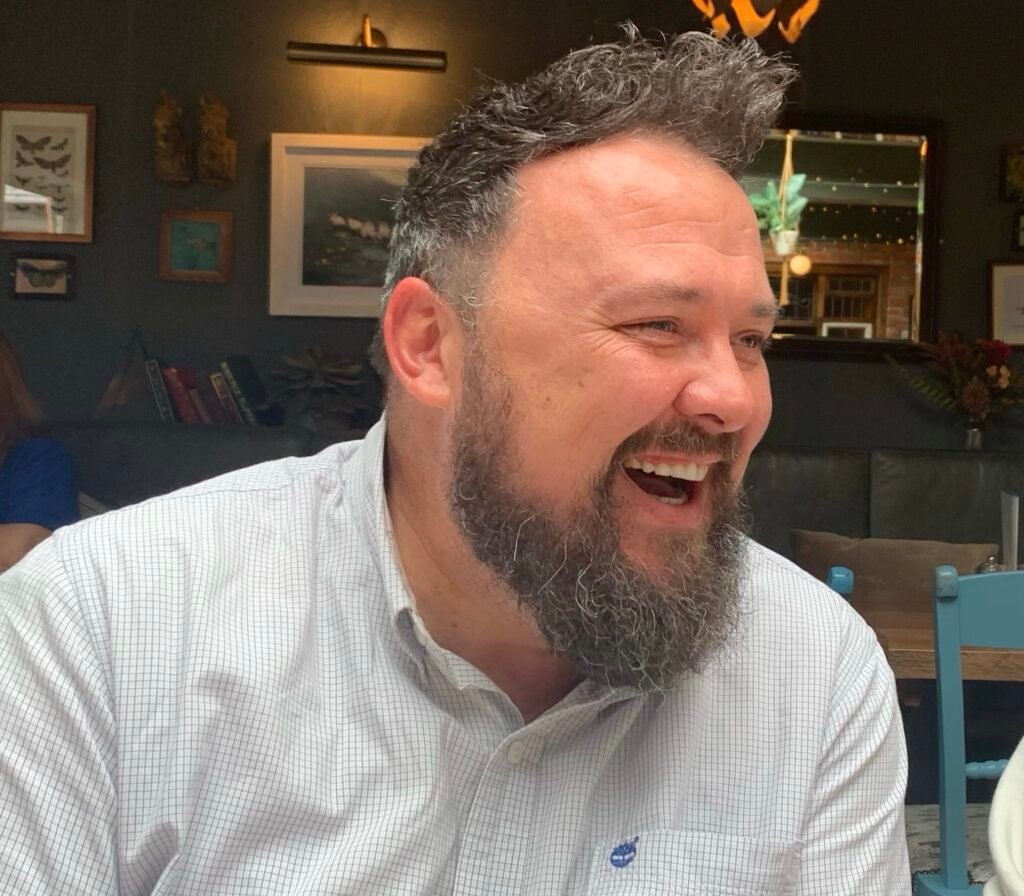
 At nineteen I was homeless. Seven months on the streets and in shelters, two GCSEs to my name, and not much reason to expect things to change. What got me through, more than anything I could point to on paper, was laughter: the people who could still find it, and the moments it created when nothing else worked.
Seven years later I had a First Class BA (Hons) in Media and Performance, specialising in humour and comedy, and a place at the University of Cambridge for my PGCE. I went on to become one of the UK’s fastest-progressing Advanced Skills Teachers, then Lead Practitioner and Initial Teacher Trainer. Along the way I collected some genuinely ridiculous jobs: sausage packer, washing-line salesman, glove-puppet demonstrator, damaged-pork-pie separator, actor. All of it turned out to be training.
Then burnout. The full stop kind.
The rebuild that followed became the work I do now. I went back to the thing that had carried me through the worst of it and asked a serious question: what does laughter actually do? Not as a nicety. Physiologically, psychologically, socially. The answer took me into gelotology, the scientific study of laughter, and a decade of research across neuroscience, positive psychology and play.
“The strategies I teach are the ones that helped me survive. I don’t just teach this. I’ve lived it.”
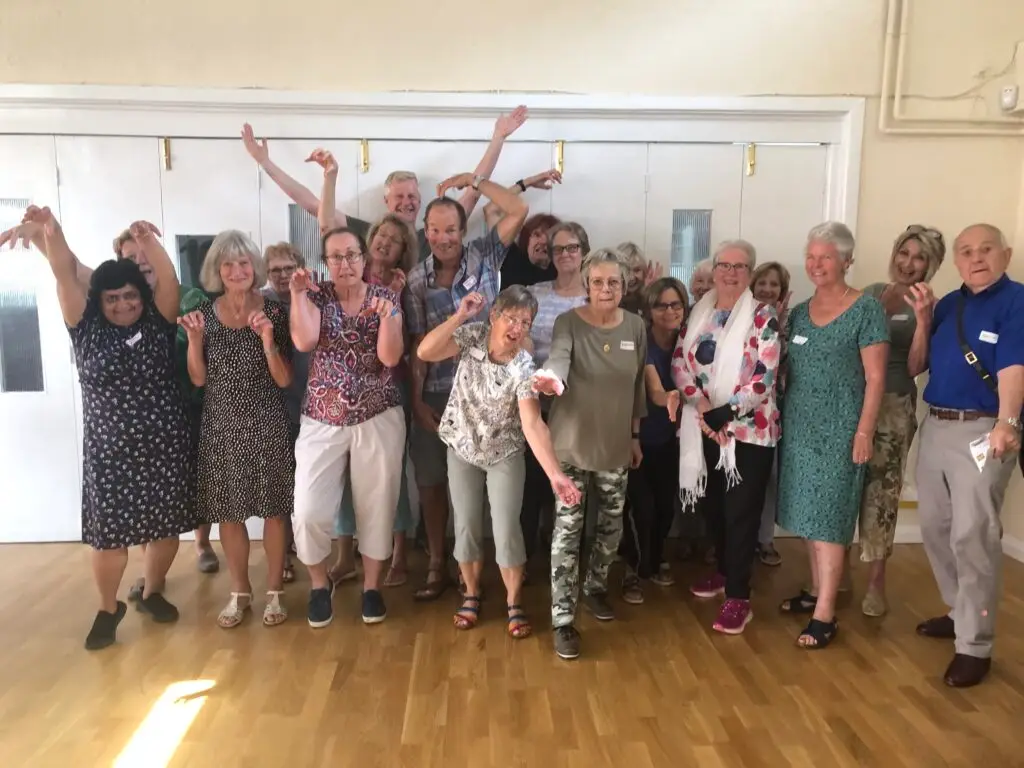
Today that research runs through everything: workshops with NHS teams, cancer support groups and suicide-bereavement charities; training for businesses and schools; BBC radio; opening the NHS Virtual Wellbeing Festival alongside Dr Michael Mosley, Dr Amir Khan and Nicola Adams OBE; and Comedy on Prescription, the creative health programme I deliver with Craic Health, supported at parliamentary level by Dr Simon Opher MP.