Laughter research
What the science actually says.
Gelotology, the scientific study of laughter, is sixty years old and still growing. As a gelotologist, my job is to read it straight: what’s proven, what’s promising, and what’s been oversold. This page is my working summary.
How I grade the evidence
Laughter research suffers from enthusiastic overclaiming, and that harms the field more than scepticism does. So I grade everything: Strong means meta-analyses or large studies that replicate. Good means solid studies awaiting wider replication. Early means promising but not yet proven, and I’ll say so. If a claim you’ve seen elsewhere isn’t here, that’s usually deliberate.
Headline findings
Six findings worth building on
Laughter interventions reduce cortisol
A 2023 meta-analysis of controlled trials found laughter interventions significantly reduced cortisol, the primary stress hormone, including after a single session.
Kramer & Leitao, PLOS ONE, 2023Laughter is social, not solo
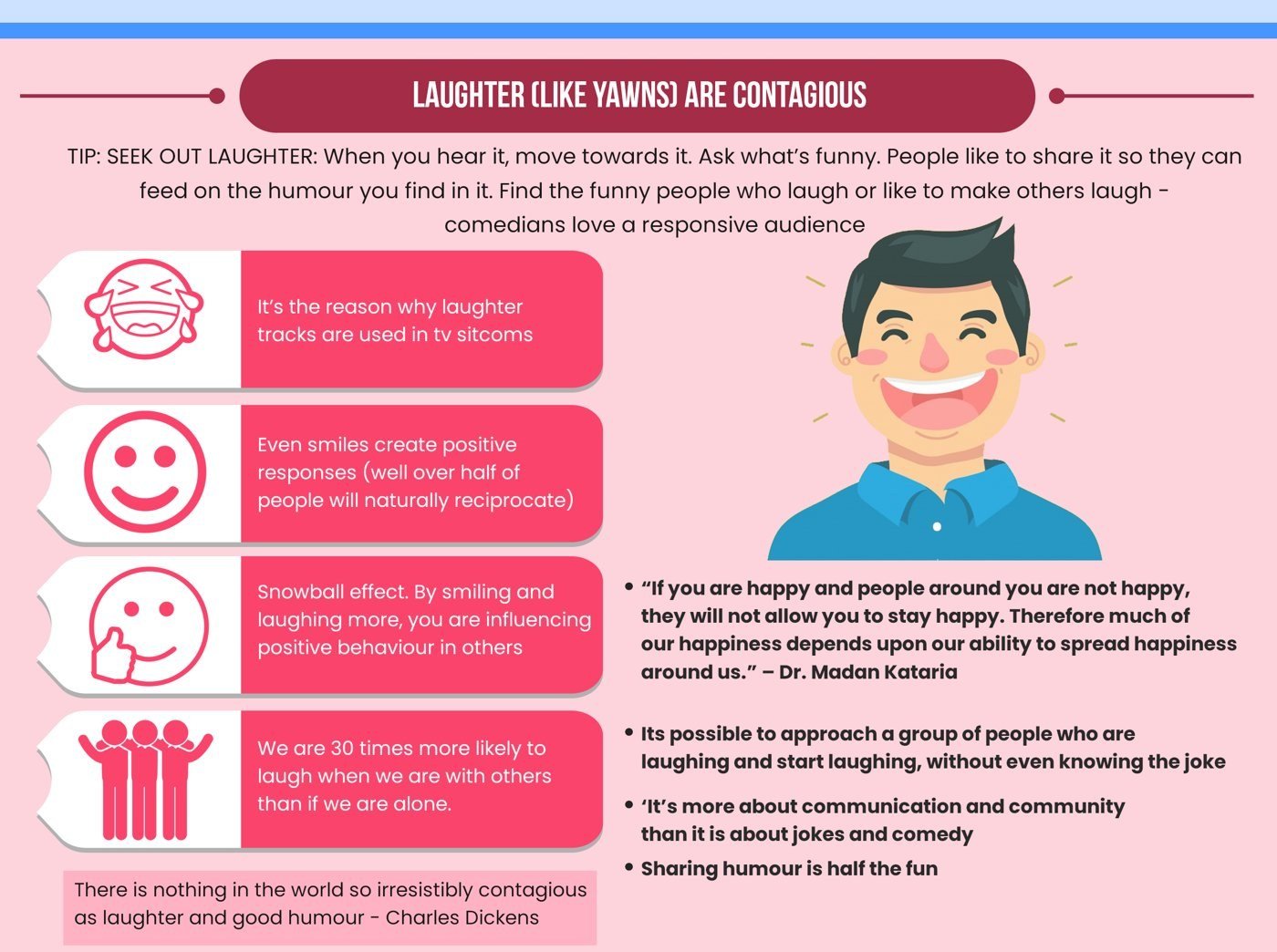
We’re roughly thirty times more likely to laugh with others than alone. Laughter is primarily a bonding signal, which is why it transforms groups, teams and classrooms.
Provine, Laughter: A Scientific InvestigationGenuine laughter raises pain thresholds
Sustained, genuine group laughter measurably increases pain tolerance, consistent with an endorphin mechanism. Forced chuckles don’t produce the same effect.
Dunbar et al., Proc. Royal Society B, 2011Daily laughter tracks heart health
In a study of over 20,000 older adults, those who rarely or never laughed had significantly higher prevalence of heart disease and stroke, even after adjusting for the usual factors.
Hayashi et al., Journal of Epidemiology (JAGES), 2016Laughter lights up the brain’s bonding chemistry
Neuroimaging shows social laughter engages the brain’s opioid system in regions tied to connection and reward, a plausible mechanism for why shared laughter builds trust so fast.
Manninen et al., Journal of Neuroscience, 2017Mood, immunity and sleep benefits
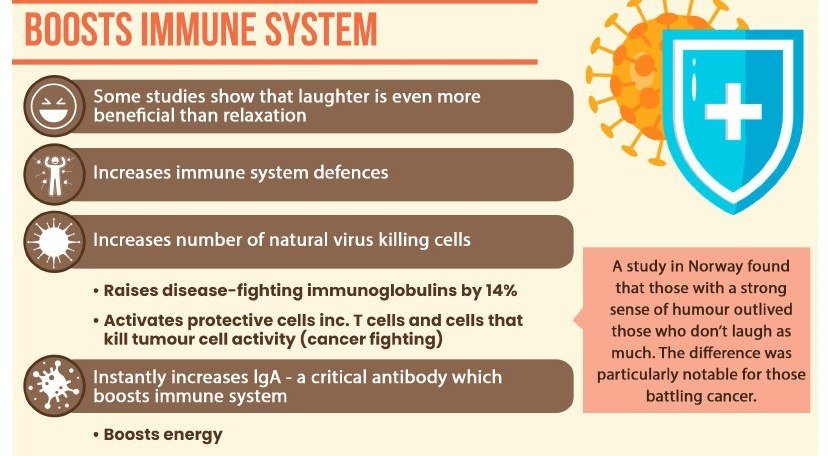
Studies point to improvements in depressive symptoms, immune markers and sleep quality after laughter programmes. Encouraging, replicating, but not yet settled science, so I present it that way.
Multiple studies; see the book’s reference tableThe body
Physiological effects
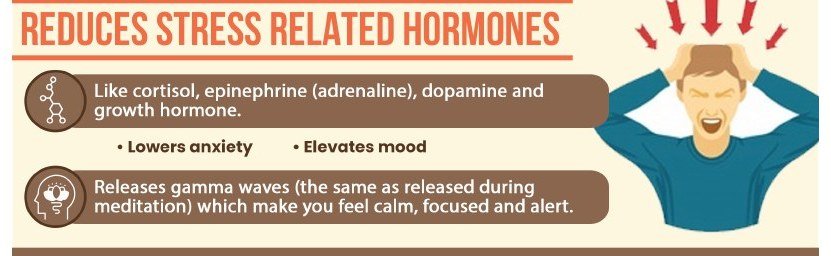
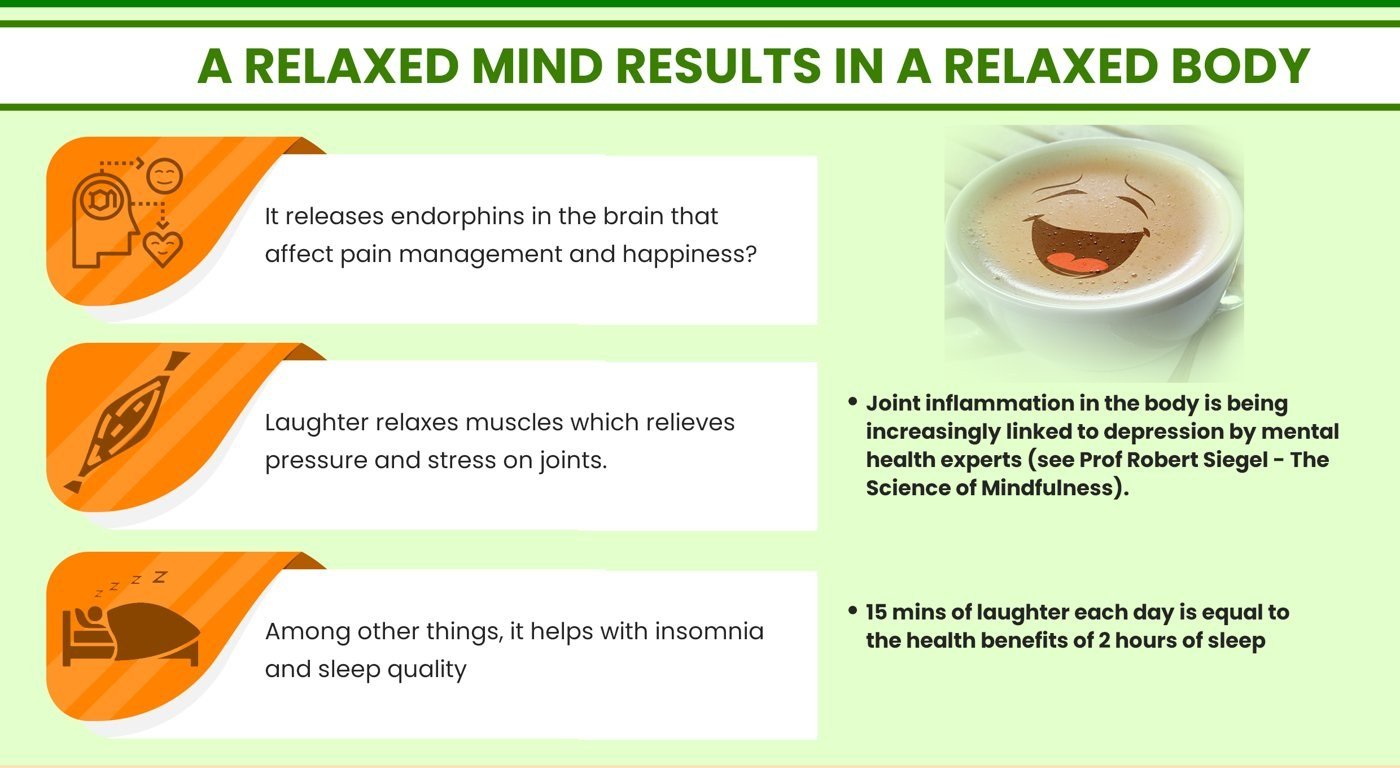
Genuine laughter is a whole-body event: it engages the diaphragm and core, raises then relaxes heart rate, and triggers measurable hormonal shifts.
- Reduces cortisol and eases physical tension
- Endorphin release, with measurably higher pain tolerance
- Gives the lungs and circulation a gentle workout
- Daily laughter associates with better cardiovascular health
A hearty laugh relaxes the body fast. It lowers cortisol and epinephrine, the primary stress hormones, increases oxygen intake, and dilates blood vessels to improve blood flow, which is why people leave sessions feeling refreshed rather than drained. There’s even a sleep dividend: laughter boosts melatonin, and Japanese researchers found participants slept more deeply after a humorous film than after the weather forecast.
“It is conceivable that laughing may be important to maintain a healthy endothelium, and reduce the risk of cardiovascular disease.”Dr Michael Miller, University of Maryland
The mind
Psychological effects
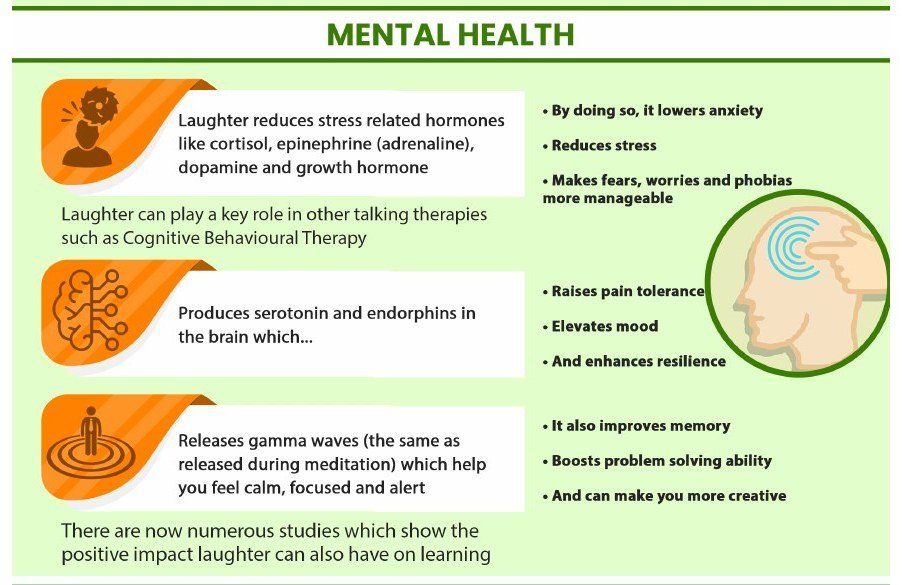
Laughter interrupts rumination, shifts perspective and builds the flexibility that resilience is actually made of. As the philosopher John Morreall put it, the person with a sense of humour is “more flexible in his approach”.
- Reliable short-term mood lift, trainable over time
- Reframes stress and supports coping under pressure
- Humour aids attention, memory and creative thinking
- A buffer against burnout in high-stress professions
Laughter is a side-effect-free tool for the mind: it releases serotonin and endorphins, eases tension and fear, and helps break cycles of rumination. It also sharpens thinking. Dr Lee Berk’s work links mirthful laughter with increased gamma-wave activity, the brain state tied to focus and processing, and in one study with older adults, humorous video exposure improved learning scores by 38.5% and delayed recall by 48.1%. Reducing cortisol matters here too: chronically high levels damage neurons in the hippocampus, a key area for learning and memory.
The room
Social and emotional effects
This is where laughter earns its keep in organisations. It’s a universal safety signal: it lowers defences, levels hierarchies and builds trust at speed.
- Shared laughter accelerates bonding and belonging
- Defuses tension and supports difficult conversations
- Contagious by design: one person’s laugh recruits the room
- A gentle route back to connection for isolated people
In healthcare, education and social care, laughter is a vital coping mechanism: it provides a safe outlet for emotional release in professions where feelings are often suppressed, and laughter-based workshops show measurable improvements in team morale and wellbeing. It’s also a leveller. It cuts across hierarchy and status, builds bridges in diverse groups, and offers isolated people a low-pressure bridge back to connection, which is exactly why it works as a creative health intervention.
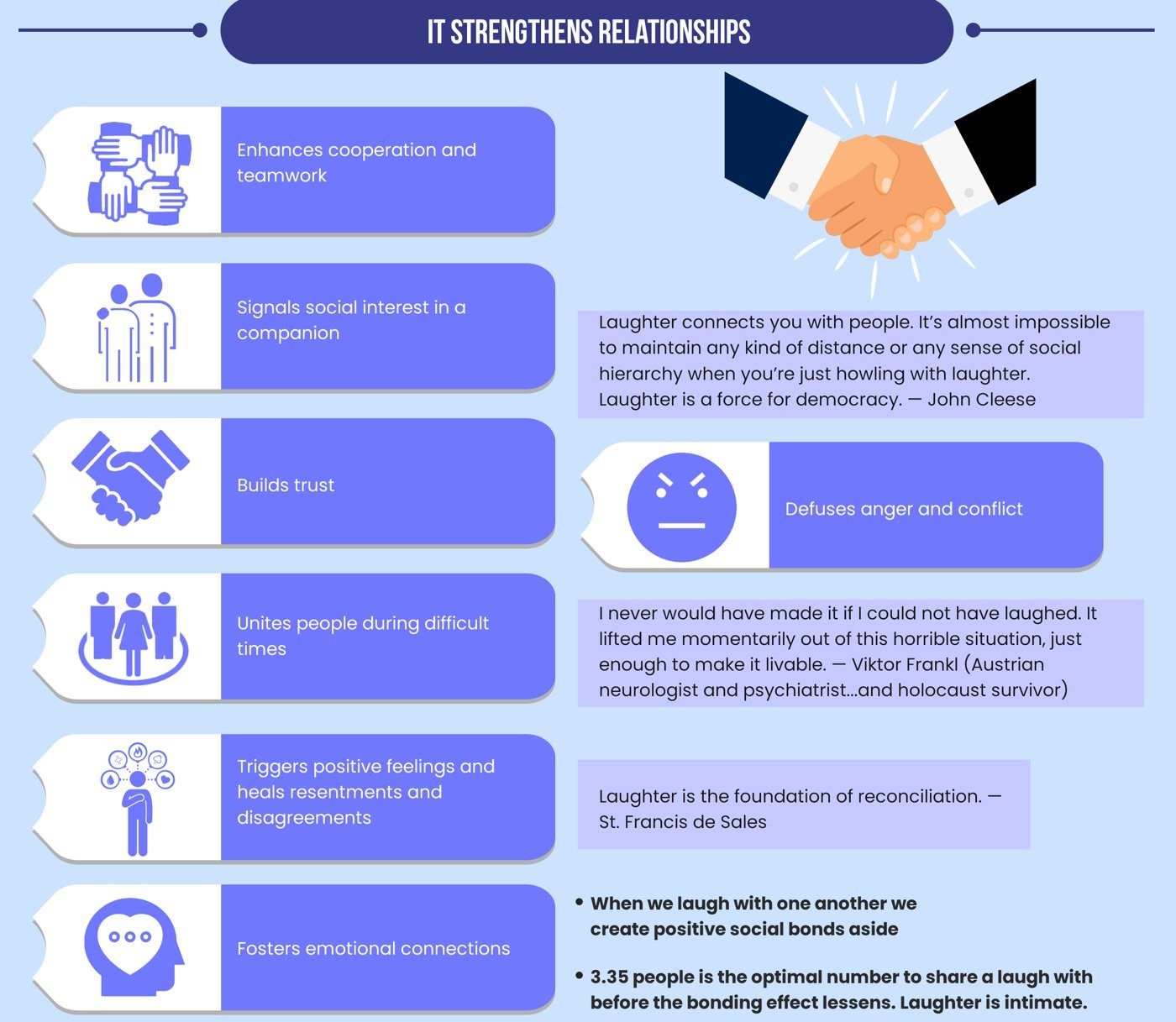
“I never would have made it if I could not have laughed. It lifted me momentarily out of this horrible situation, just enough to make it liveable.”Viktor Frankl, psychiatrist and Holocaust survivor

“The webinar contained valuable strategies that brought our team closer together and helped me personally find joy in my work again.”Wendy Lillie · Oncologist, Macmillan team
Want the full picture?
My book, You Don’t Need to Be Funny, walks through the whole evidence base with every claim graded, and The Levity Effect, the free companion guide, is on the ILP page.
Get the free guide About the book & ILP